Start with the decision, not the product
Guides
Training answers, equipment comparisons and supplement explainers organised around what you are trying to do.
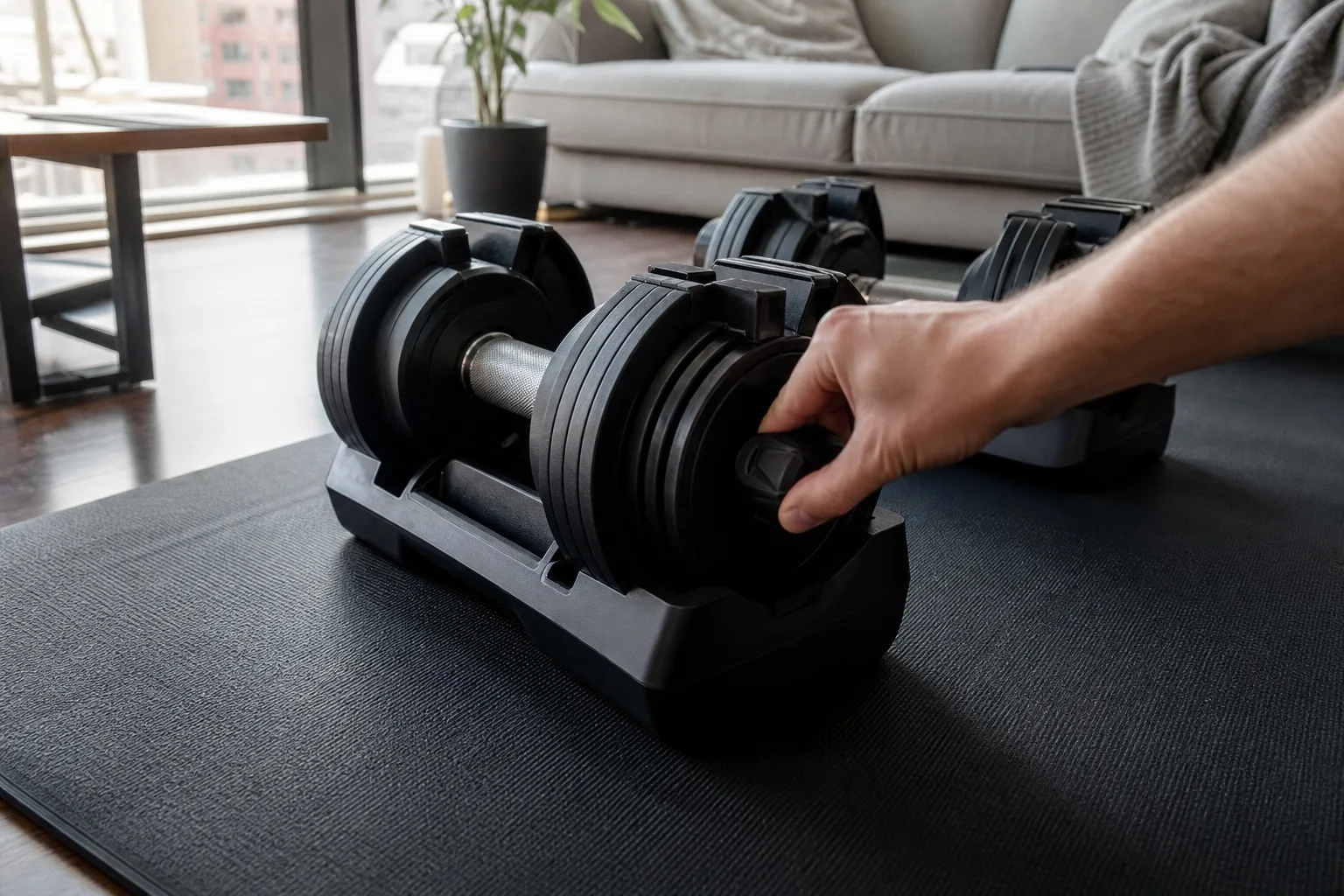
Equipment & product decisions
Buy for your space and training plan
These guides compare fit, noise, progression, certification and total cost. They do not assume the most expensive option is best. Muslex currently publishes editorial comparisons, not a live shop catalogue; see the price and SKU policy before treating any article as a current offer.
Popular training paths
Solve the problem in front of you
Body-composition literacy
Interpret weight-loss and lean-mass claims carefully
These pages explain measurement language and the ordinary training and nutrition levers that help retain muscle. They do not provide medication protocols.
All training & lifestyle guides
Browse every published answer below.
- 3-day full body workout routine — Yes for most beginners and many intermediates — if sessions include progressive compounds and enough weekly hard sets.
- Does Alcohol Stop Muscle Growth After Lifting? — Alcohol does not instantly delete a workout, but heavy drinking impairs sleep, recovery, and training quality — frequent binge patterns make hypertrophy harder.
- Protein Timing After Workout: What Actually Matters — Daily protein total and meal distribution matter more than a 30-minute panic window; peri-workout protein is useful convenience.
- Training plateau fixes — Audit sleep, body weight, technique, and weekly hard sets before changing your whole program.
- Can You Build Muscle Working Night Shift? — Yes, with protected sleep blocks, realistic volume, and consistent protein — expect slower progress than ideal sleepers.
- Does Cardio Kill Muscle Gains If You Also Lift? — Cardio does not automatically kill gains. Interference shows up when hard endurance volume, poor calories, or exhausted legs collide with lifting recovery.
- Creatine Dosage: How Much Per Day + Common Myths — About 3–5 g monohydrate daily for healthy adults; optional loading ~20 g/day for 5–7 days — protocol table and myths FAQ.
- Does Creatine Cause Hair Loss? What Evidence Shows — One small study raised DHT questions; broader evidence does not establish that creatine monohydrate causes hair loss in healthy adults.
- Creatine loading vs daily dose — Both paths saturate muscles; loading is faster, daily low dose is simpler. Pick the style you will adhere to.
- Can You Build Muscle With Only Dumbbells at Home? — Yes — if you train hard enough near failure, progress reps or load, and cover push, pull, squat, and hinge patterns with enough weekly hard sets.
- Epley vs Brzycki 1RM Calculator: Which Estimate to Use? — Both Epley and Brzycki estimate one-rep max from reps-to-fatigue — use either consistently for percentages, and prefer our dual calculator over ego max tests when you are tired or under-recovered.
- Lagging Glutes: Hip Thrust, Hinge & Volume Decision Guide — Lagging glutes usually need progressive hip extension work — thrusts, hinges, and lunges — with enough weekly hard sets and a full range you can own.
- How to Grow a Lagging Upper Chest: Incline Bias Without Neglecting Strength — Lagging upper chest usually needs more quality incline pressing and fly volume — not endless flat bench — while keeping total chest work recoverable.
- Gym Anxiety for First-Timers: A Practical Calm Plan — First-gym nerves are common. Use a short script, a simple full-body template, and off-peak hours — you do not need perfect confidence to start progressive training.
- Hotel Gym Dumbbell Workouts to Maintain Muscle on Work Trips — On short trips, maintain with 2–4 compact dumbbell sessions: hit squat, hinge, push, and pull hard enough near failure — do not expect PR season in a hotel corner.
- How Many Rest Days per Week for Lifting? — Default 1–3 rest days weekly by split — answer-first calendar table, back-to-back rules, and rest vs deload.
- How Much Weight Should You Add Each Week? — Add the smallest plate that still challenges you when reps hit the top of your range — often 1–2.5 kg (2.5–5 lb) on upper body and a bit more on lower body compounds.
- How Often Should You Train Each Muscle? — A useful hypertrophy default for healthy adults is about twice per week per major muscle — adjusted for recovery, schedule, and total hard sets.
- Is 6 Hours of Sleep Enough to Build Muscle? — Some people build muscle on ~6 hours, but most lifters progress better closer to 7–9 hours — treat 6 hours as a constraint to program around, not an ideal target.
- Is DOMS Normal After Lifting? — Yes — delayed onset muscle soreness is common after hard or unaccustomed training. Sharp joint pain is not “good DOMS.”
- Isolation vs Compound Lifts: When to Use Each for Muscle Growth — Compounds build efficient full-body stimulus; isolation fills gaps and spares fatigue. Use both — do not treat the debate as a religion.
- Machines vs Free Weights for Muscle — Machines and free weights both build muscle when progressive overload is honest; choose the implement you can load, recover from, and access consistently.
- Morning vs Evening Workouts: Which Is Better for Muscle? — Both morning and evening lifting can build muscle. Choose the slot you can repeat for months; then manage sleep, food, and warm-ups around that choice.
- Beginner PPL workout vs full body — If you train about three days a week, full body usually wins. PPL fits better when you can train six days or carefully accept the tradeoffs of a 3-day PPL.
- Sample weekly training calendars — Use these sample weeks as starting templates — not rigid prescriptions. Match the calendar to days you can keep for 12 weeks, then adjust volume with recovery feedback.
- Sets per muscle group (volume landmarks) — Start around a recoverable mid-range of hard weekly sets, then add only if recovery and progression allow.
- Side Delts Not Growing? Volume, Angles & Recovery Fixes — Stubborn side delts usually need more direct lateral-raise volume, better lengthened tension, and less ego on presses — not random burnout sets once a month.
- Strength Training for Women Over 40: A Beginner Framework — Start with 2–3 full-body sessions, progressive compounds, and joint-friendly loading — you can build muscle after 40 without chasing extreme programs.
- Stretch Before or After Lifting? Evidence Boundaries — Warm up with movement and light sets before lifting; save long static stretches for after training or separate sessions — long pre-lift static stretching can reduce acute power output.
- Do You Have to Train to Failure to Build Muscle? — No. Hard sets near failure build muscle; taking every set to absolute failure is optional and often costly for recovery and technique.
- PPL vs upper/lower vs full body comparison — There is no universal winner. Match days available, session length, and recovery — then stick with it long enough to progress.
- What Does RPE 8 Mean in Weightlifting? RPE vs RIR — RPE 8 ≈ two clean reps left (RIR 2); chart, estimate cues, hypertrophy defaults, mid-set fixes.
- Deload week timing — Take a deload when performance, joints, or motivation degrade across sessions — or plan one every 4–8 hard weeks even if you feel “fine.”
Ask Muslex
Training questions, content partnerships and B2B enquiries are welcome. Your message opens on your device; this site does not store the form details.