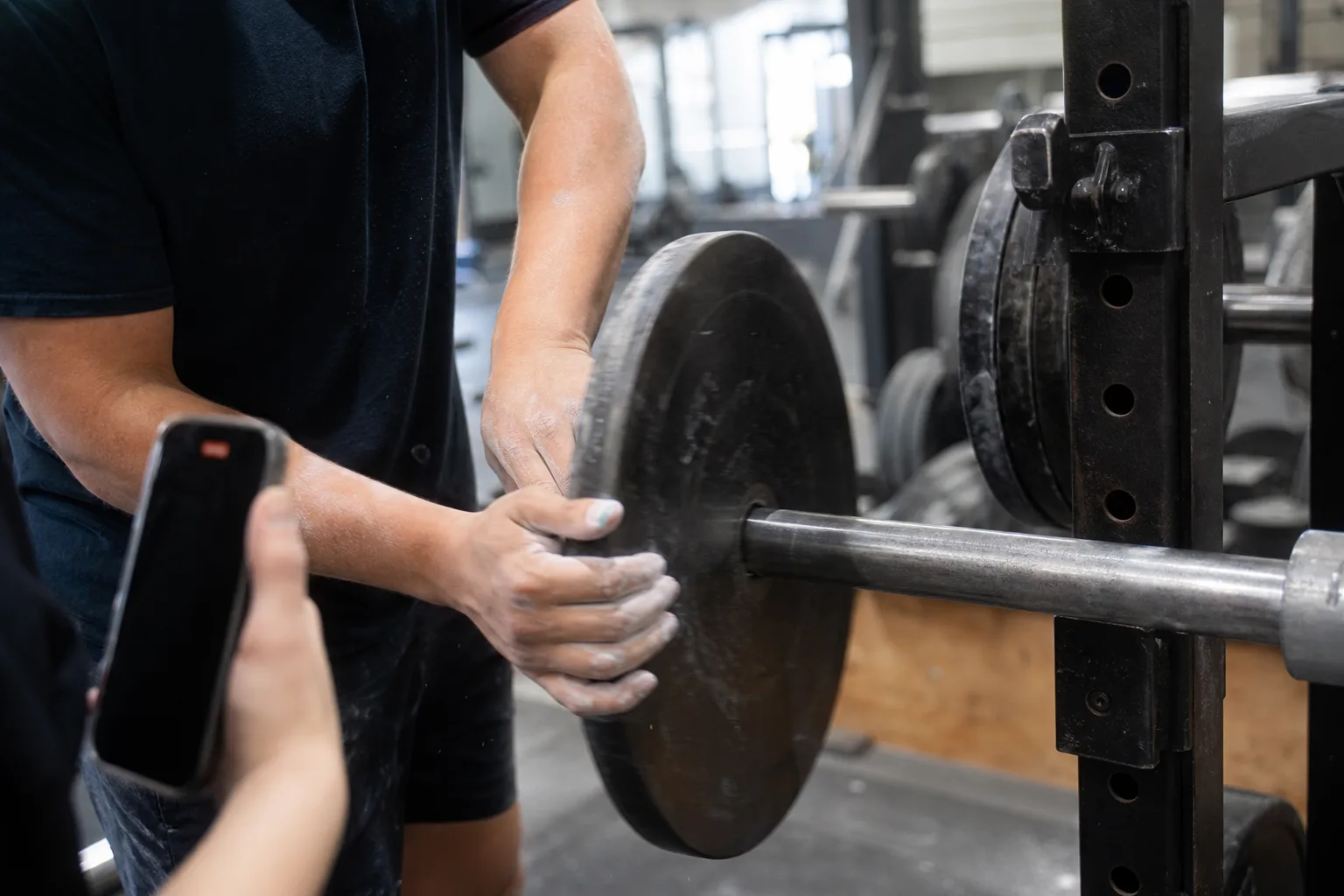
One topic · progressive overload
Progressive Overload
Performance education — not medical advice. Stop and seek professional care if you have sharp pain, dizziness, chest pain, or unexplained symptoms.
This pillar owns progressive overload only. Weekly set landmarks, RPE definitions, deload timing, and plateau audits are child guides — linked below, not re-homed in this H1.
What progressive overload means
Progressive overload is the gradual increase of training stimulus that drives adaptation. In the gym that usually shows up as more weight on the bar, more reps with the same weight, more hard working sets for a muscle, closer proximity to failure on purpose, longer range of motion, or cleaner technique at the same load. It is not “destroy yourself every session.” Collapsing form every week is not progressive overload; it is rehearsal of bad motor patterns.
ACSM progression models for healthy adults discuss systematic increases in resistance-training stress over time (ACSM progression models). Muslex translates that into lifter language: log the work, change one variable when possible, and respect recovery so next week’s progressive overload is still honest.
If you only remember one rule: hit the top of your rep range with solid form → add the smallest honest load → rebuild reps. That double-progression loop is the default progressive overload method for most healthy adults after the first linear weeks.
Seven progressive overload methods
Use this table as the how-to checklist for progressive overload. Pick one primary lever per lift for a block. Stacking every lever every week is how people invent junk fatigue.
| # | Method | How to apply progressive overload | Best when | Abuse risk |
|---|---|---|---|---|
| 1 | Add load | Same reps; +1–2.5 kg (≈2.5–5 lb) or next microplate | Form solid; top of rep range hit | Ego jumps; joint irritation |
| 2 | Add reps | Same load; climb toward top of range (e.g. 6→8) | Near top RPE with room; large plate jumps | Endless easy sets with no tension rise |
| 3 | Add hard sets | +1 weekly hard set for a lagging muscle (2–4 weeks) | Load/reps stalled; recovery still good | Sleep crash; systemic fatigue |
| 4 | Raise proximity to failure | Keep load; leave fewer clean reps in reserve | Autoregulating stress or travel weeks | Living at failure on big compounds daily |
| 5 | Improve ROM / pauses | Same load; fuller depth or paused reps | Technique block; depth limited load jumps | Novelty without measurable progress |
| 6 | Slow eccentric / denser rest | Same load/reps; slower lowers or shorter rests | Dumbbell jump too large; home gym | Turning every set into a tempo circus |
| 7 | Better quality at same numbers | Same load/reps; cleaner path, less bounce, stricter lockout | Beginners; after form drift | Pretending “feel” replaced logging |
Methods 1–2 cover most progressive overload for strength and hypertrophy. Methods 3–4 are secondary levers once the log is already moving. Methods 5–7 keep progressive overload alive when equipment or technique blocks a load jump — details for weekly plate maths live in how much weight to add each week.
When to add weight vs reps
This is the decision table most searchers want after “what is progressive overload.” It answers add weight or reps without pretending one answer fits every machine stack.
| Situation last session | Next progressive overload step | Why |
|---|---|---|
| All working sets hit top of range (e.g. 3×8) with clean form | Add smallest honest load; rebuild toward top reps | Classic double progression |
| Hit top reps on set 1–2, missed on final set | Hold load; chase the last set to top reps | Finish the rep range before loading |
| Last set was a struggle but still clean | Hold load; optional +1 rep only if form stays honest | Hard ≠ automatic load jump |
| Failed a planned rep with collapsing form | Same load next week (or −5–10%); fix technique | Failed grind is not progressive overload credit |
| Machine / DB jump is huge (e.g. +5 kg / +10 lb) | Reps, pauses, or denser rest first | Large jumps break method 1 |
| Three honest weeks flat despite sleep/food OK | See stall checklist; maybe +1 hard set later | Do not invent a new programme every Monday |
Case A · beginner linear progressive overload
Persona: healthy adult, 0–6 months consistent training, squat or goblet pattern, can add small plates. Target 3×5 on a primary squat variation at manageable effort. Progressive overload here is mostly load each week while form stays deep and braced.
| Week | Load | Sets × reps | Notes | Next progressive overload move |
|---|---|---|---|---|
| 1 | 40 kg / 90 lb | 3 × 5 | Establish depth and bracing | +2.5 kg / +5 lb if all reps clean |
| 2 | 42.5 kg / 95 lb | 3 × 5 | Still leaves 2–3 reps in reserve | Add again if depth holds |
| 3 | 45 kg / 100 lb | 3 × 5 | Last set slower but clean | Add if no form drift |
| 4 | 47.5 kg / 105 lb | 3 × 4–5 | Miss one rep on set 3 | Hold load; finish 3×5 before next jump |
| 5+ | Same until 3×5 | 3 × 5 | Linear phase ending | Switch to Case B double progression |
Linear progressive overload often lasts weeks to a few months on basic patterns if recovery cooperates. When weekly jumps stall, do not force ugly PRs — move to double progression.
Case B · double-progression progressive overload (bench)
Persona: intermediate on a stable upper/lower split. Primary lift: barbell bench. Target 3 sets of 6–8 at roughly two reps in reserve. Add load only after hitting 3×8 with clean form. This is the flagship progressive overload case on Muslex.
| Week | Top-set plan | Logged example | Decision next week | Accessories |
|---|---|---|---|---|
| 1 | Establish 6–8 range | 60 kg × 8,8,7 | Hold load; chase third set to 8 | Keep volume steady |
| 2 | Same load | 60 kg × 8,8,8 | Add smallest plate (+2.5 kg if form allows) | Unchanged |
| 3 | New load, rebuild reps | 62.5 kg × 6,6,6 | Add reps toward 8 | Optional +1 set side delts if recovered |
| 4 | Continue double progression | 62.5 kg × 8,7,7 | Finish rep chase or microload | If joints cranky → plan a deload |
| Deload (as needed) | ~60% hard sets or easier effort | Technique focus; keep patterns | Resume at last honest load | Cut specialty first |
Squat and hinge patterns use the same progressive overload logic with possibly smaller jumps or more rep-first weeks if depth or back position limits load increases. Pair with weekly load jumps and Training plateau fixes when the log goes flat.
Case C · progressive overload with large dumbbell jumps
Persona: home or hotel gym; dumbbells jump 2.5–5 kg (5–10 lb) per hand. Forced load jumps break progressive overload — so methods 2, 5, and 6 carry the block until the next pair is earnable.
| Week | DB press load | Sets × reps | Progressive overload lever | Pass rule |
|---|---|---|---|---|
| 1 | 20 kg / 45 lb each | 3 × 8 | Establish clean lockouts | All sets ≥8 → chase 10 |
| 2 | Same | 3 × 9–10 | Add reps | Hit 3×10 → add 2 s eccentric |
| 3 | Same | 3 × 10 (slow eccentric) | Tempo / quality | Still clean → try 1 s pause on chest |
| 4 | Same | 3 × 8–10 paused | Pause ROM | 3×10 paused → attempt next DB pair |
| 5 | 22.5 kg / 50 lb each | 3 × 6–8 | Load jump earned | Rebuild toward 10 with same levers |
This is still progressive overload: the stimulus rose every week even when the dumbbell number stayed put. Related: dumbbells-only home muscle and hotel gym maintain.
When progressive overload stalls
- Confirm body weight and protein are not quietly crashing — education aids: protein and TDEE.
- Audit sleep and life stress before rewriting the programme (sleep pillar).
- Check the log: are “working sets” actually hard, or mostly warm-ups?
- Film technique on the stalled lift; fix obvious drift before adding load.
- Schedule a deload if performance and joints degraded for 1–2 weeks (Deload week timing).
- Only then change variation, weekly hard sets, or intensity structure — see Training plateau fixes. Keep the How to choose a workout split stable so you can attribute the result to progressive overload, not calendar chaos.
Effort, sets & deload (satellites — not this page’s primary keyword)
This pillar owns progressive overload only. Supporting ideas get short bridges so they do not steal the SERP job:
- Effort / RPE–RIR — how hard a set feels inside progressive overload. Full explainer: RPE training: what RPE 8 means. Failure as a tool: train to failure for hypertrophy.
- Weekly hard sets — how many productive sets you accumulate; raise this only after load/reps stall. Guide: sets per muscle group · tool: Weekly set volume calculator.
- Deload — planned easier week so progressive overload can resume. Guide: Deload week timing · recovery context: recovery pillar.
Evidence anchors for the progression principle and set dosing remain ACSM progression models and hypertrophy volume meta-analyses (listed in References). Treat numbers as educational bands, not prescriptions.
Tools and guides
- How much weight to add each week — plate maths for progressive overload
- Training plateau fixes — when progressive overload stalls
- RPE training: what RPE 8 means — effort language inside the plan
- Sets per muscle group — when to add hard sets
- Deload week timing
- 1RM calculator · RPE → %1RM · Weekly set volume calculator
- How to choose a workout split — calendar that lets progressive overload stick
FAQ
What is progressive overload?
Gradually increasing training stimulus — typically load, reps, hard sets, or movement quality — over time while keeping technique honest. It is the core long-term driver of strength and muscle progress for healthy adults.
Is progressive overload necessary to build muscle?
For long-term progress, yes in some form. You can maintain with stable loads; growth usually needs gradual increases across weeks or months. You do not need a personal record every session.
How often should I increase weight?
When you hit the top of your rep range with solid form and planned reps in reserve. Beginners may add weekly; intermediates often add more slowly and may spend weeks adding reps first.
Should I add weight or reps?
Default: add reps to the top of the range, then add the smallest honest load and rebuild. Prefer reps first when plate or dumbbell jumps are large.
Does progressive overload only apply to lifting?
The principle is broader, but this page focuses on resistance-training progressive overload for healthy adults.
Progressive overload vs periodization?
Overload is the need to progress stimulus. Periodization is the calendar structure (waves, deloads, volume blocks) that organizes that progress.
What if I stall for three weeks?
Audit sleep, body weight, and true hard-set effort. Film technique. Deload if beaten up. Then change one variable — variation, hard sets, or intensity — while keeping the split stable.
Can I do progressive overload with dumbbells only?
Yes. Use Case C: climb reps, add pauses or slower eccentrics, then take the next pair when those quality standards are met.
Safety boundary
- This page assumes you are a generally healthy adult cleared for resistance training.
- Persistent joint pain, numbness, swelling, chest pain, fainting, or post-injury issues: see a qualified clinician — Muslex does not diagnose or treat.
- Progressive overload never means pushing through sharp pain or neurological symptoms.
References
- ACSM — Progression models in resistance training for healthy adults.
- Schoenfeld et al. — Weekly volume dose-response (PubMed 27433992).
- Schoenfeld et al. — Training frequency and hypertrophy (PubMed 27102172).
- Zourdos et al. — Resistance training-specific RPE scale (PubMed 26599254).
- ACSM — Physical activity guidelines resources.
- Editorial note: Summaries are for education on training performance. Individual response varies; this is not a clinical protocol.